News

Food Photographer Dhanraj Emanuel Puts Secrets on the Wall

Food Photographer Dhanraj Emanuel Puts Secrets on the Wall

After moving to the states, Dhanraj Emanuel craved the Indian dishes of his childhood. He had never cooked before, so he mixed spices by smell to sate his nostalgia.

Emanuel comes from a family of photographers. Soon enough, the two worlds collided and Emanuel found his way into the field of food photography. Finding commercial success required leveraging food to elicit emotions like desire, FOMO, or comfort. But his new project does just the opposite.

The project is an expression of Emanuel’s experience with overwhelming grief. He uses photography to deconstruct and make that origin abstract. “Reclaiming” interacts with the symbolic nature of color, texture and form using only powdered foods and spices.

Host Frank Stasio discusses the changing landscape of food photography in the age of social media and organic food with Dhanraj Emanuel, who is also an instructor at Randolph Community College. The exhibit is on view at Revolution Mill in Greensboro through the end of 2019 with a special reception on Saturday, Dec. 7 at 6 p.m.

Listen on WUNC >

Greensboro Farmers Market Temporarily Moving To Revolution Mill

AdobeStock_286511738-e1575057053524-1208x640.jpeg

If the Greensboro Farmers Curb Market on Yanceyville Street is part of your Saturday routine, that routine is going to need some adjustment for the first month of the new year.

The Greensboro Farmers Curb Market at 501 Yanceyville St., across the street from the World War Memorial Stadium, is moving for the month of January 2020 to Revolution Mill at 1601 Yanceyville St.

The building at 501 Yanceyville, which has housed the Greensboro Farmers Curb Market since 1963, will have the interior painted and extensive ceiling work done, which is supposed to be finished by the beginning of February when the Farmers Market is scheduled to return to its home.

The work on the ceiling will highlight the curved barrel ceiling by removing layers of paint to reveal the wood lathing, and the massive interior steel beans will painted to bring focus to the expansive ceiling.

The Farmers Market management expects the majority of the vendors to make the move to Revolution Mill. It’s a good time for the move since the winter months are considerably slower at the Farmers Market, but the market at its temporary location will continue to offer fresh seasonal produce, eggs, dairy, seafood, meats, baked goods, crafts and more.

Greensboro Farmers Curb Market Executive Director Lee Mortensen said, “We’re building on the synergy with Revolution Mill created when we partnered in October for A&T Homecoming and we’re looking forward to returning to a refreshed Market building in February.”

During the past four years the Greensboro Farmers Curb Market has had nearly $200,000 in building and grounds improvement including the establishment of a chef demonstration kitchen and cafe, a community education and meeting room, interior and exterior performance states and an audio and video system.

If you find that your car takes you to 501 Yanceyville Street on Saturday mornings out of habit, the temporary location at Revolution Mill at 1601 Yanceyville is only a mile north.

See it on Rhino Times >

Revolution Mill opens Gallery 1250 with first exhibition ‘Triple Vision’

VISIONS-MAIN-Mike-Northuis-Annunciation-detail-1-750x354.jpg

Revolution Mill will officially open Gallery 1250 and host their first art exhibit, “Triple Vision,” on Oct. 11 at 1250 Revolution Mill Dr. in Greensboro. The opening reception will be from 5:30 to 8:30 p.m., and the exhibit will run through early January 2020, said artist and director of Gallery 1250 Jan Lukens. Lukens said that The Bearded Goat would provide drinks and everyone is invited to this free event with complimentary food. Gallery 1250 is not to be confused with the Central Gallery, which is still operating and located at 1150 Revolution Mill Dr.

Lukens said that Gallery 1250 is a 2,800 square foot art gallery that was formerly known as the WamRev Gallery, a satellite exhibition space that was utilized by the Weatherspoon Art Museum. During a period of time awaiting grants, Revolution Mill decided to host the first WamRev Gallery exhibit. This featured James Cameron, a mural street artist from Raleigh, who painted the entire gallery’s 18-foot walls from floor to ceiling in green geometric patterns with only house paint and masking tape during the same week that Lukens moved his studio across the hall. The WamRev Gallery art opening for Cameron was in October 2016.

“Because the grants were not received and the walls were covered with a mural, the Weatherspoon was unable to use the space, and the gallery was only used for business meetings and events for the next two and a half years,” Lukens said.

Lukens said he pushed to utilize the space as an art gallery again and was asked to submit a business proposal. Management at Revolution Mill responded by making him the director. He contacted two other artist friends, Roy Nydorf and Michael Northuis, and invited them to the gallery so they could do the first show together. After a lengthy discussion, they all decided it was a good idea. That happened in June, and the walls were re-painted in July. Lukens said he is pleased to be a part of Gallery 1250’s first exhibition with two of his good friends whose art he has admired for decades.

Read the rest on Yes! Weekly >

Artists revive Revolution Mill gallery space

5d926c7165092.image.jpg

For nearly three years, Jan Lukens looked out from his Revolution Mill art studio onto a mostly-empty gallery space across the hall.

Lukens creates paintings in the historic former textile mill off Yanceyville Street, now a campus of offices, studios, event areas, apartments and restaurants.

Back in 2016, UNCG’s Weatherspoon Art Museum and Revolution Mill managers had arranged for Raleigh-based artist James Marshall (aka Dalek) to paint a colorful geometric design on the walls of the 2,800-square-foot space with 18-foot ceilings.

They called it Gallery 1250 for the building’s address on Revolution Mill Drive.

They wanted to make that mural the first in a series of collaborations, reflecting a commitment to present bold and imaginative exhibitions and reach new audiences.

But there it stood. Weatherspoon didn’t receive the grants needed to proceed with other artists’ projects there. Campus tenants used the space for meetings.

This year, Lukens proposed another idea for Gallery 1250 to Revolution Mill’s managers.

“Give it to me,” Lukens said.

They did.

On Oct. 11, Gallery 1250 will reopen as an art exhibition space.

Read the rest on News & Record >

North Carolina’s Handcrafted Denim Comeback

Denim might just be the most universal of fabrics. The hardy cotton twill has its origins in France – it was originally called “serge de Nîmes,” named for the town where it was developed – but the textile’s star has become quintessentially American. Blue jeans go along with the mindset of America; of freedom and rule breaking. They’re casual and cool, functional and tough, at home in a farmer’s field, on a rock stage and on a catwalk. While Bruce Springsteen dons denim on an album cover, Meghan Markle wears fashionably ripped blue jeans on outings with Prince Harry.

Despite the fabric’s French roots, North Carolina has mastered the denim craft. Beginning in the late 18th century, the state’s cash crops of indigo and cotton, combined with easy railroad access, meant that the denim industry flourished here. In 1890, Greensboro had so many trains coming in and out of it that it was nicknamed the Gate City. Six years later, brothers Moses and Ceasar Cone (Americanized from Kahn) came to Greensboro on one of those very trains and opened the textile manufacturer that would eventually become Cone Mills. Another man, C.C. Hudson, arrived in 1897 to work in a factory that made overalls. When it closed, Hudson and a few colleagues set up their own small shop, which would evolve into Wrangler. Up until the late 20th century, it’s a safe bet that nearly every pair of jeans in the United States had fingerprints on it from someone in North Carolina.

Things started to change in 1994, when the North American Free Trade Agreement was signed. An overwhelming number of American textile producers pulled up stakes and moved production to Mexico in search of cheaper labour; later, it was China. Throughout the 1990s, North Carolina became a hub of new industries, specifically technology and pharmaceuticals, much of which was centred in the Research Triangle Park region outside of Raleigh. But while industry in the state has diversified and the huge textile mills are gone, there’s still denim production – albeit on a smaller, more thoughtful scale. And the history is everywhere, as long as you know where to look.

Learn more on Air Canada >

Art-o-mat dispenses art to the people

Clark Whittington is inviting the world to be a part of the growing Art-o-mat family of artists, hosts and collectors, with over 170 machines across the United States as well as Canada, Australia and Austria. You can track the locations with an online map, so you are “never artless” in your travels, but you don’t have to leave the Triad to find an Art-o-mat machine. Whittington’s concept of encouraging more art consumption while reaching audiences that artists may have never accessed is keeping old vending machines out of the landfill and repurposing them into art dispensing machines where people can buy art on their own terms for $5.

Local Art-o-mats can be found in Greensboro at Revolution Mill and in its hometown of Winston-Salem at the Southeastern Center of Contemporary Art, the Reynolda House Museum of American Art, Foothill’s Brewing Tasting Room, Mary’s Gourmet Diner, A/perture Cinema, Salem Fine Arts Center, Artwork’s Gallery, Krankies Coffee, Earl’s, Jugheads Growlers & Pints, Wake Forest University, Wherehouse Art Hotel, The Olio Glasshouse, St. Paul’s Episcopal, and the Benton Convention Center. From locations in Walnut Cove, Durham, Cary, Boone and beyond North Carolina, Art-o-mats are on the move.

Whittington, an artist and native of Concord, owned Rococo Fish Gallery in the Charlotte’s NoDa (North Davidson) Arts District in the late ‘80s before he moved to Winston-Salem. He said his art comes to him from his experiences and ideas. One day, he observed a friend’s Pavlovian reaction to seek a vending machine upon hearing the crinkling of a cellophane snack wrapper, he sketched out his first Art-o-mat machine, a piece of art itself created from retired cigarette vending machines.

In 1997, he transformed his first old cigarette machine into a functional piece of art to dispense his black and white peel-a-part Polaroids and later invited other artists to be involved creating “Artists in Cellophane” for his conceptual work that included an Art-o-mat.

“I love how artists take this format and make it their own,” he said. “I enjoy seeing people come up with great ideas and getting them into an Art-o-mat and keeping their art alive. When artists and buyers connect through an Art-o-mat, it’s tangible, it’s real, and it’s something people can take with them and enjoy.”

Read the rest on Yes! Weekly >

'A Huge Deal For Us': Greensboro's Revolution Mill Adds Popular Downtown Bar

GREENSBORO, N.C. — When The Bearded Goat lit up its "open" sign Friday night, the bar became the latest addition to an ambitious development converting a 120-year-old textile mill into a modern destination to live, work, and play.

Greensboro's Revolution Mill has packed a lot into what used to be an aging flannel mill, the first in the U.S. South. The property is large enough to need a "campus map" to help people find their way around the 150-unit apartment complex, cafe, pizzeria, restaurant, workspaces for 109 companies, and more on site.

"All of the sudden, this little kind of campus community has come alive," said Nick Piornack, General Manager of Revolution Mill, whose job includes managing leasing, construction, and third-party relationships.

Beneath towering smokestacks built in 1898, family and friends gathered at the Bearded Goat on Friday night for a soft opening. 

The grand opening for the general public at the Bearded Goat bar at Revolution Mill is Saturday, June 29 at 6 p.m.

"We're very casual. Our motto is, 'Come as you are.' Come as who you are. It doesn't matter how much money you have in your pocket. If you want to spend two bucks or if you want to spend 100 bucks. And we've just really lived by that motto," said Seth Mapes, owners of the Bearded Goat.

The Bearded Goat is expanding to Revolution Mill from its original location in Downtown Greensboro, which opened in October 2016. Revolution Mill first approached Mapes about the prospect of growing to the revamped textile mill about a year and a half ago, said Mapes.

"When we first opened up downtown, I had, I think, three employees for the first couple months. Right now, with Revolution Mill opening, we have roughly between 20 and 28 people working for us with security, bar-backs, bartenders, everything like that," said Mapes.

As for the larger Revolution Mill project, the Bearded Goat is one of the last additions in phase one of development, said Piornack. Architects for the project aim to preserve the historic textile mill atmosphere. 

See the rest on WFMY >

Greensboro Fashion Week Presents Summer Edition

Greensboro Fashion Week (GSOFW) will hold a "Summer Edition" fashion show on Saturday at the iconic Revolution Mill.  

It is an annual showcase of the glamour, style, and talent present across the state of North Carolina.

GSOFW Creators Witneigh Davis and Giovanni Ramadani introduced the fashion show to give local models, hairstylists, make-up artists, and clothing designers an opportunity to gain hands-on experience in the realm of fashion. 

Watch the rest on WFMY 2 >

The Syllabus: UNCG's museum studies program

5d039ecb5e13e.image.jpg

I don't write often about existing academic programs. New ones, sure, like this one at N.C. A&T, for instance, and this one at High Point University. But existing ones? Rarely, if at all. Professors teach, students learn, lather, rinse, repeat. Where's the news in that, right? 

There's one program that seems to be an exception to my coverage blackout, and that's the museum studies program at UNCG. This master's degree program offered through the history department is for those interested in working as curators, educators and managers at museums, historical sites, battlegrounds, government agencies and anyplace else there's an historical story to be told.

This week, I wrote a story about the new highway marker that captures the history of Greensboro's old polio hospital in just 23 words and abbreviations. The dedication ceremony is Saturday, and the students enrolled in the program did much of the heavy lifting to get state approval for the sign. (This group of students got their master's degrees in May, by the way.)

Read the rest on News & Record >

Our Opinion: Kontoor fits here like a pair of old jeans

When three executives from the freshly minted Kontoor Brands paid a visit last week, they came dressed in denim and steeped in optimism.

They were bullish about their company, which was part of a more familiar company, VF Jeanswear, before it was spun off last year.

They see sales ticking up and new possibilities for their marquee brands, Wrangler and Lee, which will remain separate.

And most encouraging, they see a bright future in Greensboro, which they have embraced warmly and unequivocally as their hometown.

They say they like it here because of Wrangler’s deep roots in Greensboro.

They also consider this city a good place to live and raise a family, with reasonably priced housing and manageable traffic.

And they not only want to be in Greensboro, they want to be partof Greensboro.

See the rest on News & Record >

Kontoor is coming: Opening date for the new VF jeanswear spinoff is just weeks away

Screen Shot 2019-06-24 at 12.37.28 PM.png

Within the next month, a publicly traded company with annual revenues of about $2.7 billion will officially call Greensboro its home. 

Kontoor Brands, consisting of Wrangler, Lee, Rock & Republic and VF Outlets, will spinoff from VF Corp. on May 23, according to Zack Matheny, president of Downtown Greensboro Inc. The retention of Kontoor Brands is the silver lining to the news that broke in August 2018 that VF will move its headquarters from Greensboro to Denver. 

"Losing that (VF's global headquarters) is difficult," Matheny said. "I've never sugar-coated that. It's tough."

HEADQUARTERS: The company's local footprint will consist of its headquarters at the Wrangler building on North Elm and 43,000 square feet at Revolution Mill. Matheny told Triad Business Journal that Kontoor also will move 115 people into the former Home Savings Bank building at 444 N. Elm St. Kontoor declined to confirm this to TBJ.

Read the rest on Triad Business Journal >

Revolution Mill event not a typical comic-con

“Comics Life is not a comics convention,” stressed Tristin Miller, who organized the March 31 event at Greensboro’s Revolution Mill with Acme Comics’ Jermaine Exum.

Greensboro artist and event organizer Miller is a longtime fan who thinks comic book conventions are great, but she and Exum wanted to do something a bit different with Comics Life, which she described as “more like a TEDx-style event centered around comics” in a recent phone conversation. “It’s about skill-sharing, networking, having real conversations. It’s an opportunity to connect on a deeper level and have a real talk about the industry.”

She said that doing the Greensboro Zine Fest, as well as seeing a variety of comics artists use the zine format to share information, had been a big inspiration and that the format was inspired by the Hand-to-Hand Market she’s been doing for the past eight years.

“So, the booths and the costumes and the boxes of comics for sale and the artist meet-and-greets, all the stuff you usually see at a comics convention, will only be one part of Comics Life. The meat of it will be the workshops, the panel discussions, and the presentations.”

Read the rest on Yes! Weekly >

Revolution Mill execs dig out opportunity at old self-storage building

No treasure chests. 

No long-lost works by Renoir or Rembrandt.

No rare, multimillion dollar finds a la the History Channel's "Storage Wars" unfolded as Revolution Mill General Manager Nick Piornack and company cleared out the old self-storage facility in the Mill House building of Greensboro's Revolution Mill.

Piornack said there are no concrete plans for a tenant – or tenants, potentially – for the 167,000 square feet inside the old relic. It's too soon to discuss costs, timelines, even occupancy, he said. 

"The main thing is we’ve started clearing the building and we’ll also start working on the exterior windows here in the next several months," he said. "You know, get the building good and solid and clean and dry."

Belk Architects, the firm that has done the bulk of the work on the Revolution Mill project, is in the early stages of analyzing the building. None of the other construction or trade work has been contracted yet, he said. 

The good news is the building is empty. Crews are clearing out old storage lockers, but so far they haven't uncovered anything of substantial monetary or historical value, Piornack said.

Read the rest on Triad Business Journal >

Bringing back the mill village: Nick Piornack talks Revolution

“It would be great to rebrand this whole area as the Mill Village.”

So said Nick Piornack, general manager of Revolution Mill, when I interviewed him last week. Piornack envisions the 45-acre mixed-use development off Yanceyville as the heart of a once neglected but now revitalized Northeast Greensboro, and closer to downtown than many people realize.

“When I started here, my friends downtown were amazed I was moving ‘all the way out there’ to Revolution Mill.” But it’s actually only six minutes from his old office at Downtown Greensboro, Inc. on Elm Street. “Just one mile from Moses Cone and all the medical complexes, and 2.1 miles from downtown.”

Built in 1898, Revolution was the first flannel mill in the South. By the 1930s, it was the largest producer of that fabric in the world. But it ceased operation in 1982, and by the end of the 20th century, the huge buildings that once housed looms and other machinery were empty shells.

Revolution Mill was the second textile plant established in Greensboro by brothers Moses and Ceasar Cone, three years after their Proximity Cotton Mill became the South’s first denim plant. The Cones built two additional Greensboro mills; White Oak in 1905 and Proximity Printworks in 1912.

'Kau' Takes Place of Natty Greene's Kitchen and Market in Revolution Mill

unnamed.png

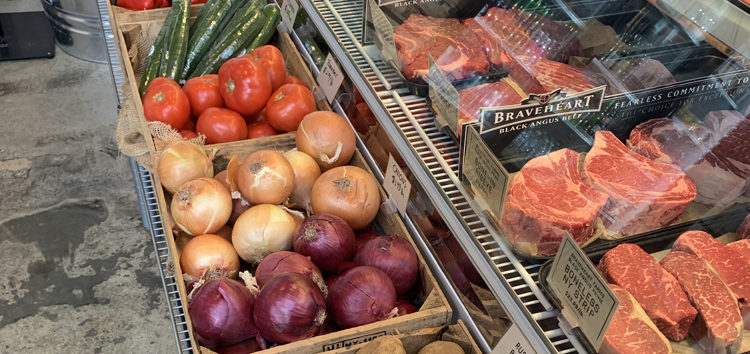
At Revolution Mill in Greensboro, Kau Restaurant, Butcher, and Bar is now open for business.

Kau took the place of Natty Greene's Kitchen and Market.

Owner Kayne Fisher used to be a co-owner of Natty Greene's.

He and the other owner, Chris Lester, split their partnership amicably, and now Fisher has started Kau. 

Fisher said he was ready for this next chapter, and wanted to explore his true passion - which is food.

"We were able to create and establish a foundational menu, but now with this transition, we can explore on top of that menu with different plated items, smaller plates - you know, we're just going to have a ball over here," said Fisher. 

As for your Natty Greene's gift cards - they won't be honored at Kau. You'll have to use them at the Natty's location in downtown Greensboro. 

See the rest on WFMY 2 >

Kau opens in former Kitchen + Market at Revolution Mill space

Kayne Fisher has unveiled a new brand, a new look and direction for The Kitchen + Market at Revolution Mill. The restaurant and market, which was part of the Natty Greene’s Brewing company brand until last fall, will now be known as Kau, which is pronounced as “cow,” to better reflect the self-taught chef and entrepreneur’s aspirations for the space. Kau will be a restaurant, a butchery, and a bar. Its unveiling took place Jan. 8 with local influencers and media getting a first glance. 

The Kitchen + Market opened in its industrial mill quarters in the summer of 2017. It’s a casual restaurant that its curator calls “industrial warmth” that has some upscale items and includes a butcher shop and market. It has been Fisher’s childhood dream.

“I spent summers with my grandparents in Detroit, and when my grandfather got off from Chrysler, we’d go to a deli or a butcher shop, grab some meat and we’d cook that night’s meal. I was always intrigued by the idea of a market and butchery. Since the age of 15, I have had the concept in mind, and this space allowed that to come to life.” 

Fisher, who said he’s learned from “the culinary school of life” since age 5, parted with the Natty Greene’s franchise last fall and said the foundational menu that made the Kitchen + Market remains unchanged, but he still wanted to start fresh with a new name to avoid confusion.

Read the rest on Yes! Weekly >

Artist’s daily diary of cuteness comes to Revolution Mill

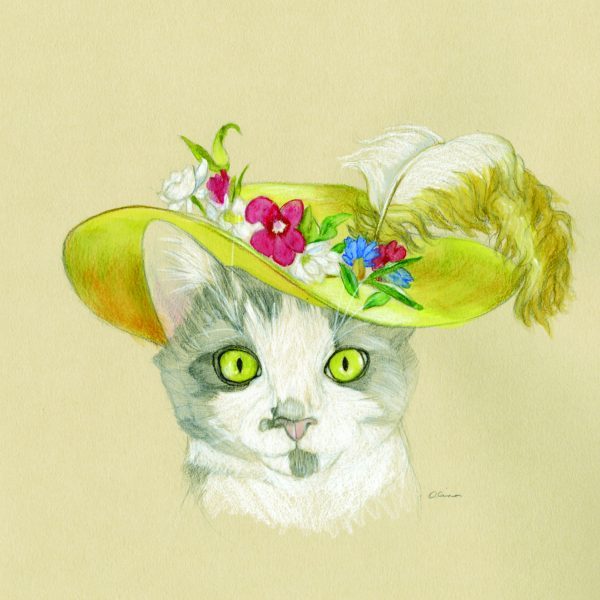
A plum-colored octopus makes doughnuts in the kitchen, two tentacles whisking the contents of a bowl, another grasping vanilla extract. She cradles butter, an egg and three fresh doughnuts in her free tentacles. According to artist Jane Oliver, the image resonates with mothers who never seem to have enough hands.

Revolution Mill’s Central Gallery is showing a selection of Oliver’s latest works through Jan. 20. She earned her MFA in painting and printmaking from UNCG in 2002 where she taught drawing and art history courses for several years. From 2014 to 2016, she taught art history and introductory design at High Point University.

“One of the things you learn in school is the importance of keeping a sketchbook,” Oliver says. “A lot of students don’t like the idea when you turn it into a homework sort of thing but when it’s your own initiative, when you decide it’s important to keep continuing your exploration of different mediums, different things to draw, drawing from life, drawing from imagination, whatever, it’s for you and no one else. When I made a promise to myself last November [to draw every day], I thought: Well, how am I going to keep it?

Read the rest on Triad City Beat >>

Native Greensboro artist returns home to Revolution Mill studio

I’ve watched Jan Lukens stick to his goals for years despite the many twists and turns his career has taken. We were studying commercial art and advertising design in 1978 when he took a job as an art director for an ad agency. In 1980, after working for a few agencies, he began freelancing as a graphic designer and then as an illustrator until 1992 when he left advertising after feeling burned out.

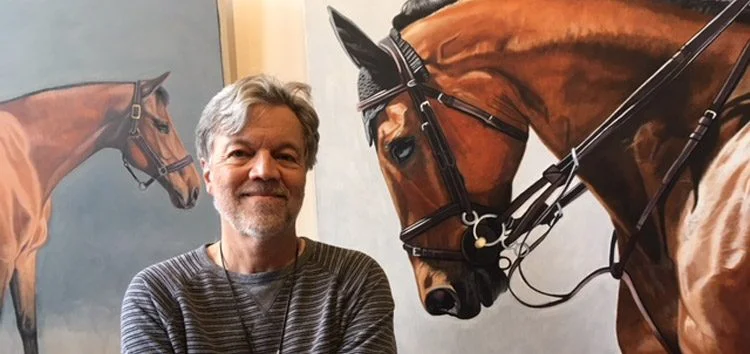
Lukens had an idea that people who owned horses would be interested in paintings of their horses. He called a dressage trainer who referred him to Parker Minshin, who not only invited him to her stables but also helped him select, groom and pose horses for his reference photography. “That was my first break, back in 1992,” Lukens said. “I did several spec paintings, framed them, printed up business cards and became a horse show vendor.”

Yet, he left his first two shows in Blowing Rock and Asheville with no commissions. 

When Lukens visited his friend, Pattie Harris Boden, an art director who rode hunters (a type of horse in competitive horseback riding), she noted that few horse painters could paint people as well as he did and suggested he paint a girl with a horse. Minshin was happy to have him paint her 12-year-old daughter, Jennifer, with her hunter. This painting landed him three commissions at a Raleigh horse show and a new client, Joanne Boyd.

Lukens recalled the day he photographed Boyd with her horse, “she liked my work and said if I came to Birmingham, Alabama, she’d throw a cocktail party and invite her equestrian friends.” Three months later, Lukens left that party with 13 portrait commissions. 

“That’s when I realized I could make a career out of this,” he said. “I owe my success in equestrian portraiture to a handful of generous, influential people who just wanted to help me succeed. Parker and Joanne were the first.” He added, “I enjoyed the equestrian community, painting portraits, and being outside with the horses. My new career really suited me.”

Read the rest on Yes! Weekly >>

Natty Greene's founders part ways, stay friends

Image property of Perfecta Visuals.

Image property of Perfecta Visuals.

One of the city's most enduring and well-known business partnerships has come to an end.

Amicably.

Kayne Fisher and Chris Lester are college buddies who founded Natty Greene’s beer.

That the two were going their separate ways has been known by many for some time, but the divergence is now official.

“We had a heck of a partnership," Fisher recalled. "It was great to be a part of a product that we turned into a brand that Greensboro should be proud of because it is still as strong as ever. But I was just ready for the next chapter."

Fisher assumes ownership of The Kitchen and Market at Revolution Mill, a restaurant the two opened last year.

"I’m happy for him," Lester said. "I hope he does really well. He wants to do more with the food. That’s his dream and he’s trying to follow his dream, which is awesome."

Lester will continue the Natty’s brand.

"I’m excited," Lester said. "I’m going to be doing the downtown pub and still doing beer at the production facility."

Meanwhile, Fisher is becoming a full-time restaurateur.

“It was time to move on,” Fisher explained. “On the beer side, he keeps Natty Greene’s and all things Natty. For me, I get to follow my true passion."

Read the rest of the News & Record article here >>

Part Of VF Corp. Moving To Revolution Mill In Greensboro

GREENSBORO (WFMY) - VF Corporation has selected Greensboro’s Revolution Mill as the new home for parts of its Jeanswear business. In August, VF announced it was creating an independent, publicly traded company, currently called 'NewCo,' which comprises VF's Jeans brands including Wrangler and Lee.

VF has signed a five-year lease with Revolution Mill. Around 125 U.S. NewCo employees will move into the 43,000 square-foot space in the former textile mill beginning in March 2019. 

“We are making great progress in our work to establish the Jeanswear business as its own publicly traded company, and today’s announcement is another important milestone as we move toward the separation in the first half of 2019,” said Steve Rendle, VF’s Chairman, President and CEO. “Revolution Mill is a historical property that honors the Greensboro community’s storied textile heritage. It’s only fitting that our Jeanswear organization will locate select functions there and help to continue the rich history and legacy of the Revolution Mill campus.”

In August, VF announced it's moving its global headquarters from Greensboro to Denver. The Denver headquarters will also become home to VF brands such as The North FaceJanSportSmartwoolAltra and Eagle Creek.

The official name of NewCo will be announced by the end of 2018. NewCo will employ approximately 25,000 employees globally.

See the rest on WFMY >>